
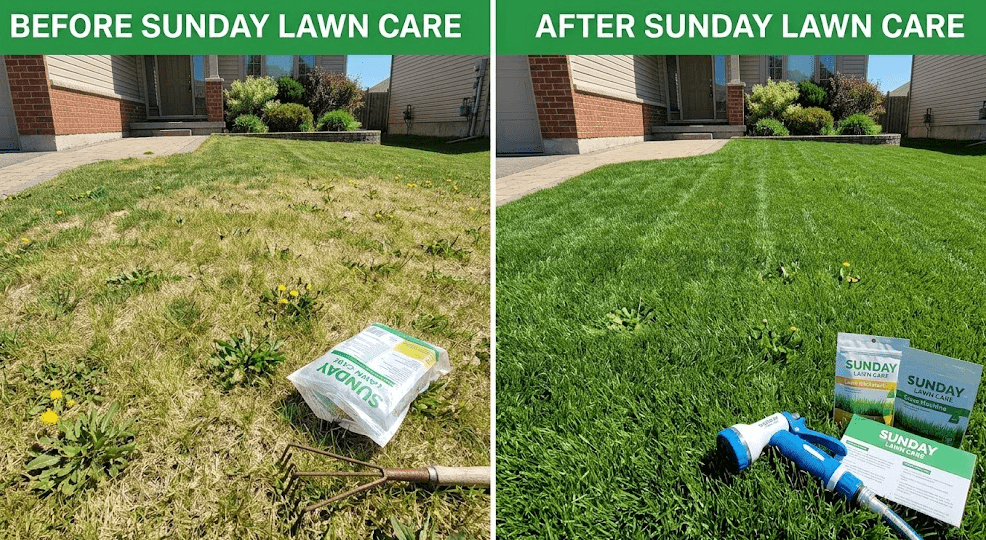
At the start of Florida’s cool winter in 2024, I looked at my southern lawn and, for the first time, recognized the monumental challenge it presented. My house lacked curb appeal. My house, my single biggest asset, didn’t look like a proud homeowner attended to it. The Spanish design I’d been drawn to when I bought it faded into the background of a patchy lawn and overgrown gardens.
I remember the day a guy knocked on my door and proclaimed he could “fix” my lawn by tearing up the failing lawn and laying new sod. It would only cost me $8,600. Yikes! Yes, I could pay him almost $10,000 for a new, pristine lawn. But I knew without a plan to protect, service, and maintain that lawn, I’d be right back in the same place in a year or so.
The Lawn Home School Classroom
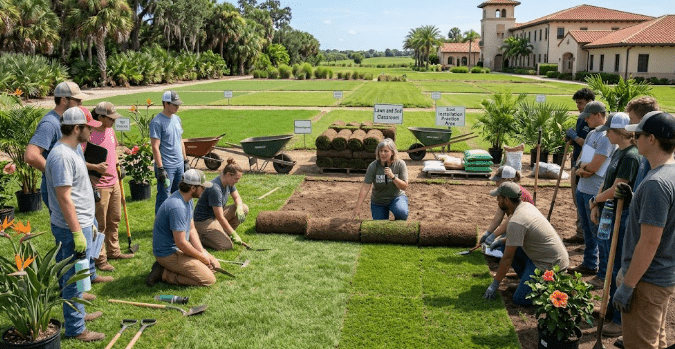
My house was built in 1976, which makes my lawn almost 50 years old. The lifespan of a well-tended St. Augustine lawn is indefinite with proper care and upkeep. In reality, most lawns require a major overhaul after 16 to 20 years. Whew, I am way overdue.
While I updated and remodeled the interior, my landscape aged and succumbed to weeds and a smorgasbord of other grass. Then came the voles and mole crickets, fungus, chinch bugs, and fire ants. Multiple lawn services performed the weekly mow-and-blow. Things looked tidy, but never great.
At least four spray companies promised to fix the grass over the years. They quoted prices ranging from $35 to $100 per month. For a while I paid two spray services at the same time. The lawn never improved, and I gave up after five years of paying for “no results.” Old-time residents told me that the lawn was being cut too short. Saint Augustine grass prefers a height of 3″ to 5″. Others said the shady tree canopy caused patchy areas. The local big-box stores said the miracle cure was more irrigation. Like many states, Florida’s strict water restrictions mandate which days a homeowner can irrigate the lawn, and that schedule doesn’t always match what the lawn needs.
Fast forward to 2026, and I’m now entering year two of the Sunday Lawn project. I fired the spray services and bought a subscription. I wasn’t attentive enough to the proper care and schedule during year one. But the lawn showed improvement despite my weak efforts. Thirty years of neglect does not get fixed overnight.
Get a Soil Test!
I kept seeing internet ads for Sunday’s Lawn Care Plan. This is a subscription plan. A box arrives at your home, and online chat agents answer questions to guide you toward a healthier lawn. Honestly, it was a relief to have someone tell me what to use and when. They did the mixing and measurements for me. All I did was screw on the hose adapter they included on each clearly labeled pouch and apply it to the lawn during the week they said to.
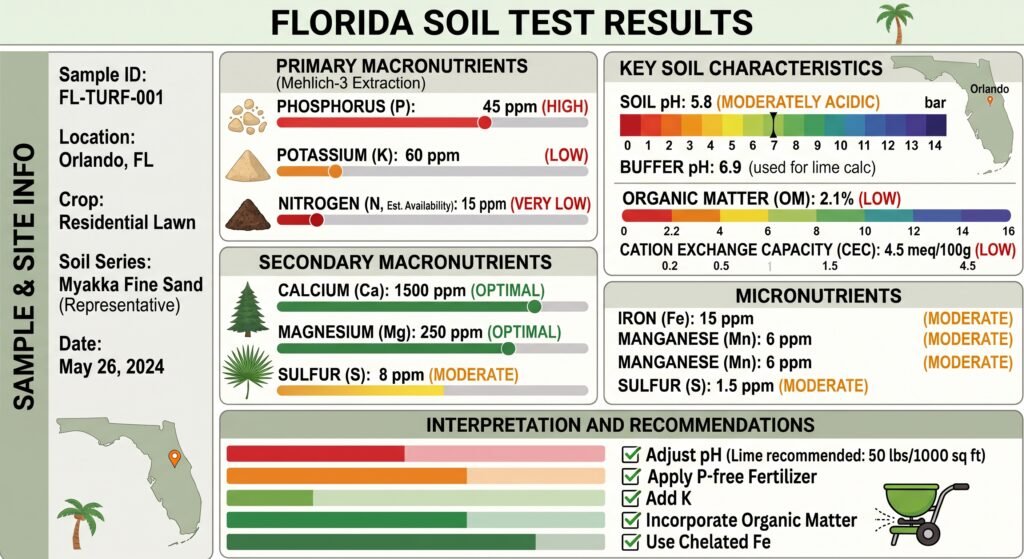
Step one was to get a soil test. Get a what?? In 30 years, no one had told me my yard soil’s acidity, sand (although I could guess that, living in Florida, it would be high), or what nutrients were missing.
The soil test was simple. Sunday sent me a grass plug sampling tool. The instructions were to take 6-10 sample plugs from different areas of the yard and put them in the bag. I applied the pre-paid postage label and shipped it off for analysis. I now know my local State of Florida horticulture center will also provide this service. But it was nice to have guidance as a lawn newbie. About two weeks later, I got the results and a complete plan from Sunday, plus tracking information for my first six months of treatments.
I snuck out in the early morning during that first year and sprayed as recommended. It was almost like starting a new diet. I didn’t want anyone to know what I was doing because it might not work. I’d wait for results. The grass responded well to the improved nutrients. The weeds loved it too! At the end of year one, I had a stronger lawn and a truly spectacular sampling of sedge, spurge, clover, and crabgrass.
The Project is Never Complete
Florida lawns are never “finished.” The Sunshine State has a 365-day growing cycle. My lawn gets a fertilizer break from November to March, but mowing, weed prevention, and irrigation continue year-round.
Winter months focus on bug and weed control. I learned the hard way that all my efforts are doomed if weeds are given the chance to take hold. Pre-emergent weed control is critical.
Irrigation is Gold
The popular southern lawn grasses grow during the hottest months of the year. Moisture evaporation is a challenge for these lawns. Florida’s sandy soil needs a finely tuned irrigation system to retain moisture.
Orlando currently has a 25-inch rain deficit for 2026. Without an irrigation system, lawns can go dormant, turn brown, and become susceptible to disease and insects. At a tipping point, the grass cannot recover, and resodding or xeriscape replacement becomes the only options.
Why I Chose a Sunday Lawn
The Sunday Lawn Care program is easy. The box arrives with all pre-mixed nutrients ready to use.
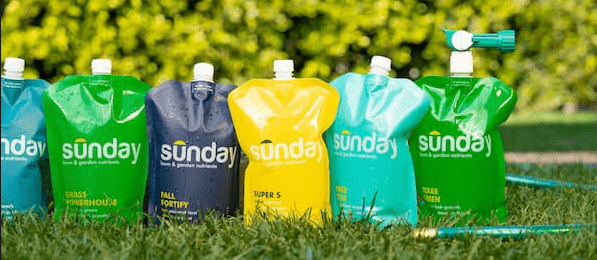
I like that every package includes supplements customized to my lawn’s specific needs based on the soil test. I know my soil is slightly acidic and requires additional lime minerals. But each treatment pouch includes additional elements and boosters.
The Sunday program is time-efficient. The custom application schedule on the website tells me exactly when to apply each packet. The total application on my 7,000-square-foot lawn takes less than 20 minutes in the morning.
I’ve seen noticeable improvements in my yard and grass. The professional spray companies that promised so much cost me over $1,500 a year. Maintaining and gradually improving my Florida lawn costs a fraction—specifically, about 30% of that cost.
Most importantly, I am seeing a measurable improvement each season. There is still room to improve each season, but I now have control of the process and my budget!