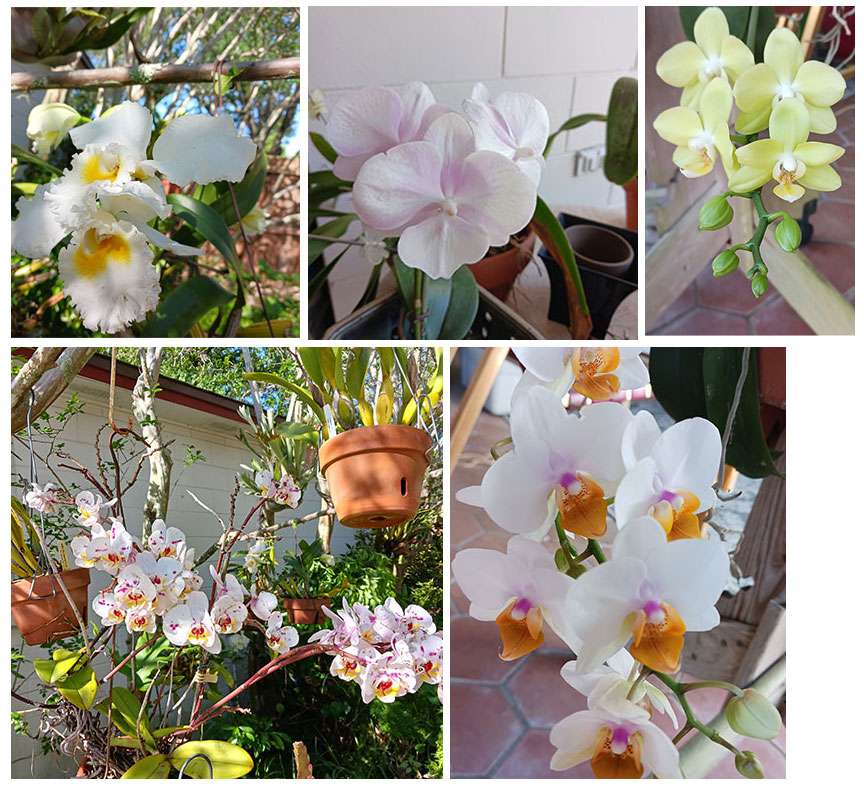
Admitting I have a favorite orchid is like a parent claiming to have a favorite child. My family teases me that whenever an orchid blooms, I exclaim, “That’s my favorite. “The truth is that I love all blooming orchids.
Many plants in my garden are beautiful, but none bring me the same joy as watching my orchids bloom. I’m enchanted by each one, but yes, there is a favorite orchid.
I know when my orchids are about to bloom based on their appearance. The bloom spike is quite elaborate, and once it shows itself, the bloom is usually a week or two away.
Thriving on neglect
It’s an old wives’ tale that orchids thrive on neglect. Orchids are not difficult to grow once they are in the right environment. These tropical plants will tolerate a short burst of cold or extreme heat but are happiest when the temperature is around 85°. Orchids like the air to be moist, but not their potting materials. They like the air humidity between 50%-80%. You can grow them indoors for a month or two by misting them with water to approximate those humid conditions, but they will eventually show dry ridges in their leaves in a home environment.
Preditors of the orchid species
Healthy orchids attract some familiar predators. In Florida, the biggest threats are fungus, aphids [and any insect that wants the sweet, sugary water that new blooms produce], and scales. My 67 orchid plants hang in crepe myrtle trees. A few years back, I placed a few orchids on the ground under the trees while I was out of town. Slugs and snails killed them. The slugs and snails won’t climb the tree to get to them, but they are easy prey on the ground.
My biggest orchid problem is scale. It’s a constant battle to keep the brown scale under control. Brown scale loves humidity, and once it takes hold of one plant, the entire collection can be quickly infected.
Scale can be arrested and treated with rubbing alcohol applied to the plant leaves. This is a simple and inexpensive solution for small collectors. But swabbing 67 orchids a few times in two weeks is quite a task. I normally turn to insecticide oil like Neem© initially, and I’ll spray the plants later in the month with a diluted mixture of hydrogen peroxide and water. A benefit to this approach is that insecticide oils also treat fungus and an abundance of bad insects.
Orchids and fragrance
Orchids, like roses, come in all kinds of shapes and forms. The most famous are moth orchids — phalaenopsis — that you see in abundance in the big box stores. Most phalaenopsis orchids are not fragrant.
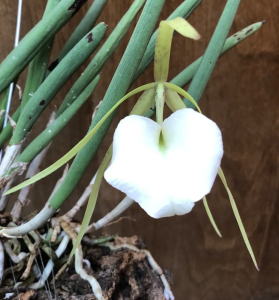
My first introduction to fragrant orchids happened by chance when I was given a Brassavola Nodosa. I hung it in the back of the trees because it looked like grass. One day, I noticed this lovely light perfume in the garden bed, and I saw that it had produced these beautiful, peace lily-like flowers.
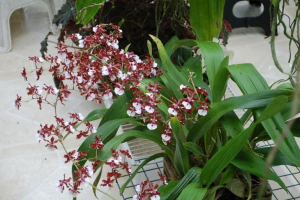
I own a few oncidium orchids that have fragrance. The most familiar of these is the “chocolate” orchid Sharry Baby. This plant blooms with large spikes of small raspberry- to brown-colored blossoms that smell like cocoa. Sharry Baby’s leaves resemble grass or long blades. It requires more water during the growing season but is easy to grow for beginners.
The corsage blooms – cattleya orchids
The cattleya orchid is the top flower every Mother’s Day, and I call these my corsage orchids. Cattleya orchids are usually fragrant and range from extremely strong to soft scents.
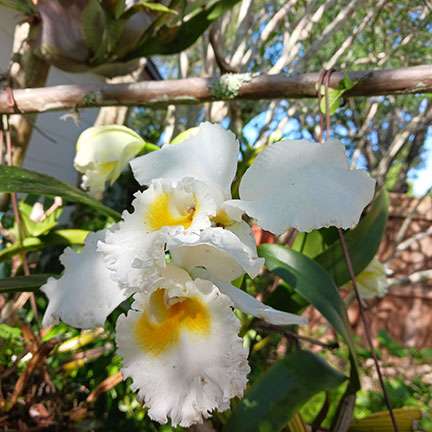
White Swan, or Rlc Shinaphat Diamond cattleya. This beauty is over 30 years old and has been divided eight times. It has a floral fragrance, almost like jasmine.
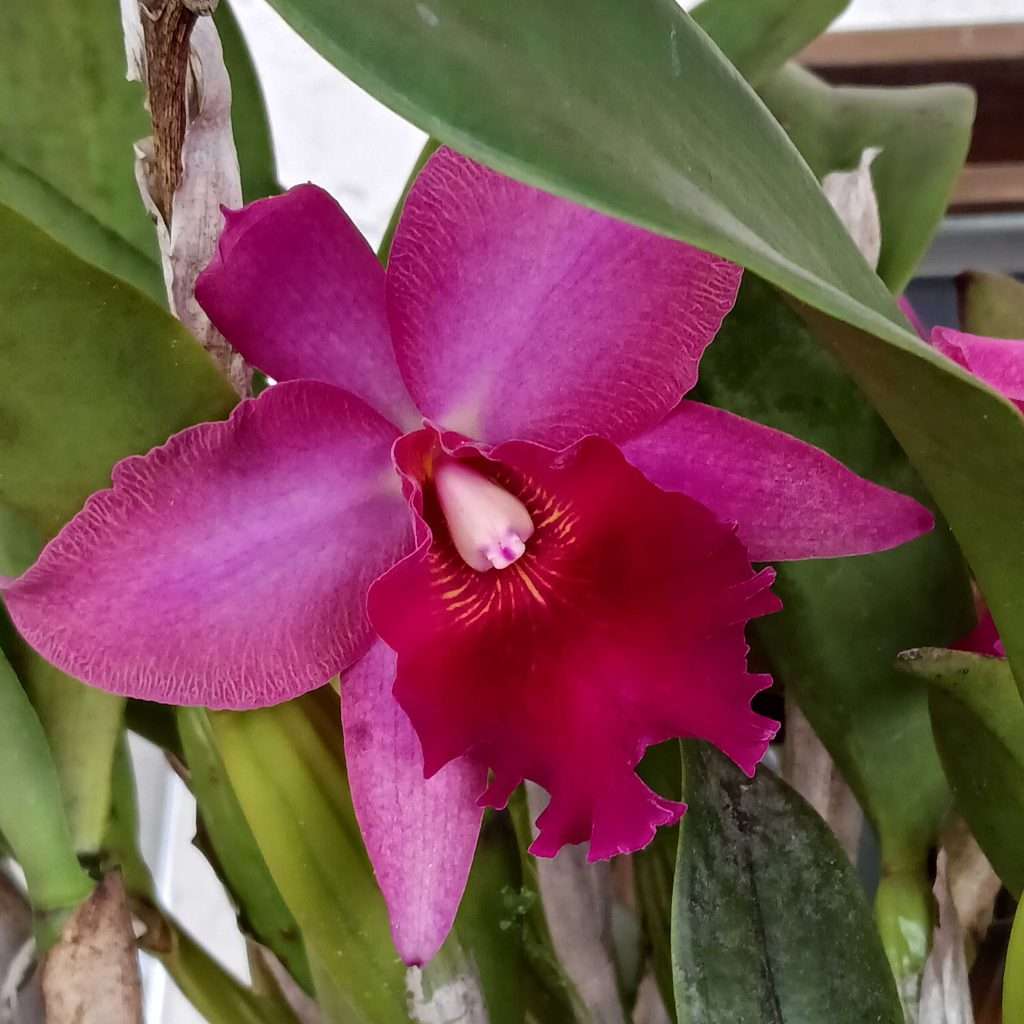
A native of Brazil, the labiata is a crimson orchid or ruby-lipped cattleya. I bought this at auction in 2011. The fragrance is spicier, almost like cinnamon, than its white cousin.
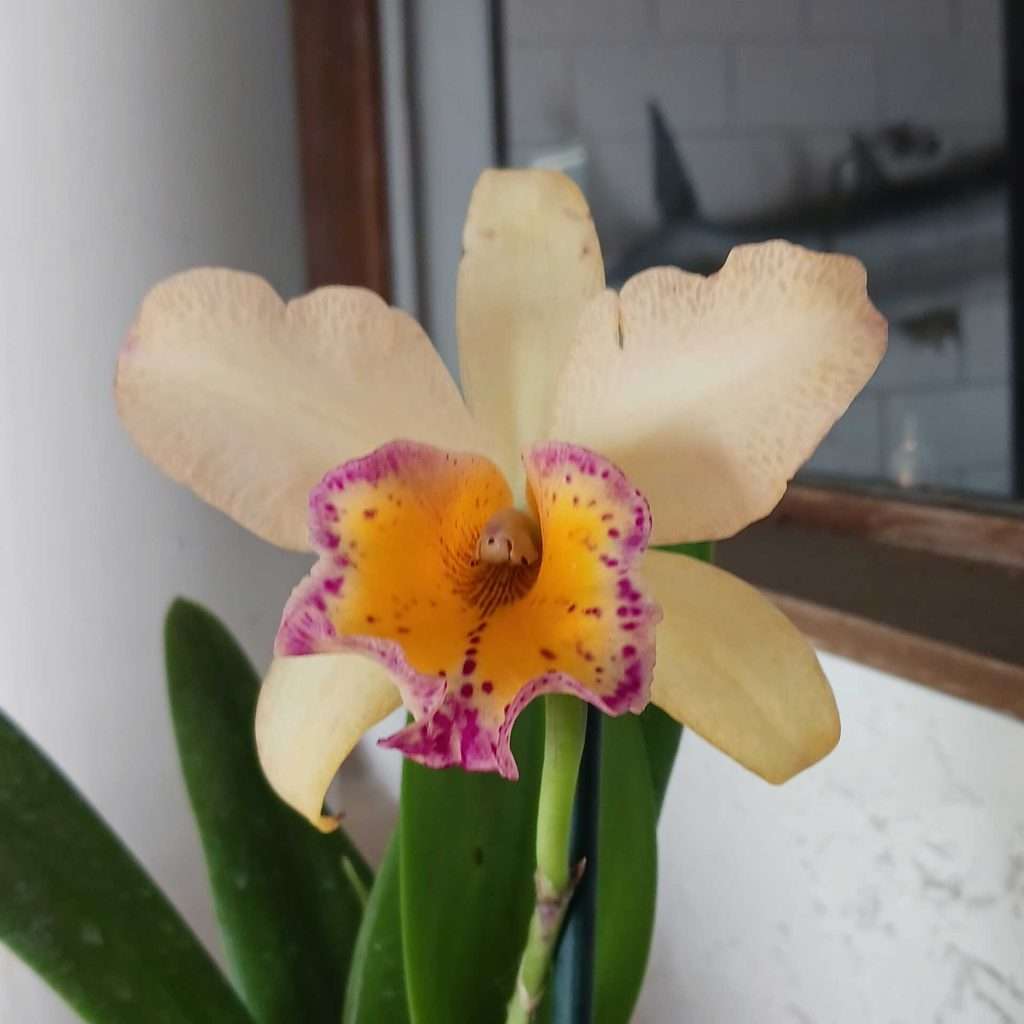
One of my newest plants is the Golden Gem hybrid. It is considered a primary hybrid because it is a cross pollentation of two species orchids. It has a soft perfume scent.
Bare root orchids
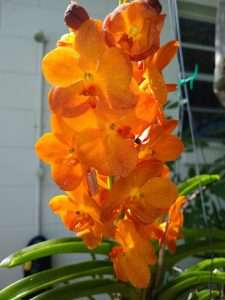
Vanda orchids are native to the tropical regions of Asia and the Pacific. These plants are striking for their enormous flower clusters and are often grown in trees and baskets with roots exposed. They prefer bright lights and warm temperatures. They require high humidity and regular feeding to bloom well.
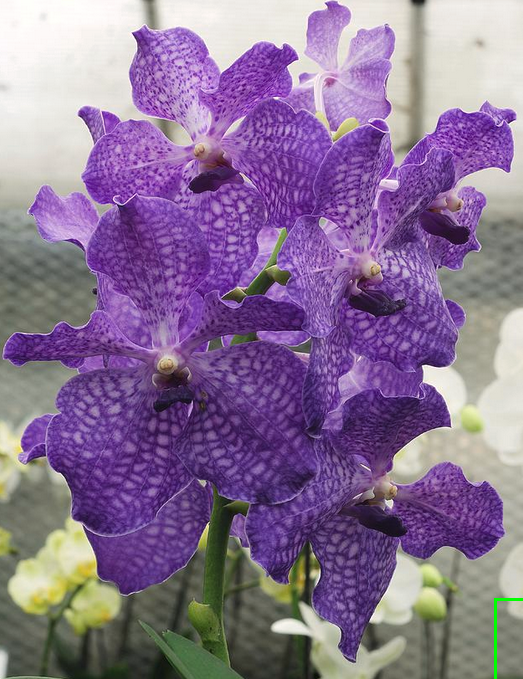
The blue or purple vanda orchid is the most recognizable with it’s fan shaped leaves and bright purple cluster of blooms. But vandas also come in red, yellow, white, gold, and brown.
Unpredictable flowers
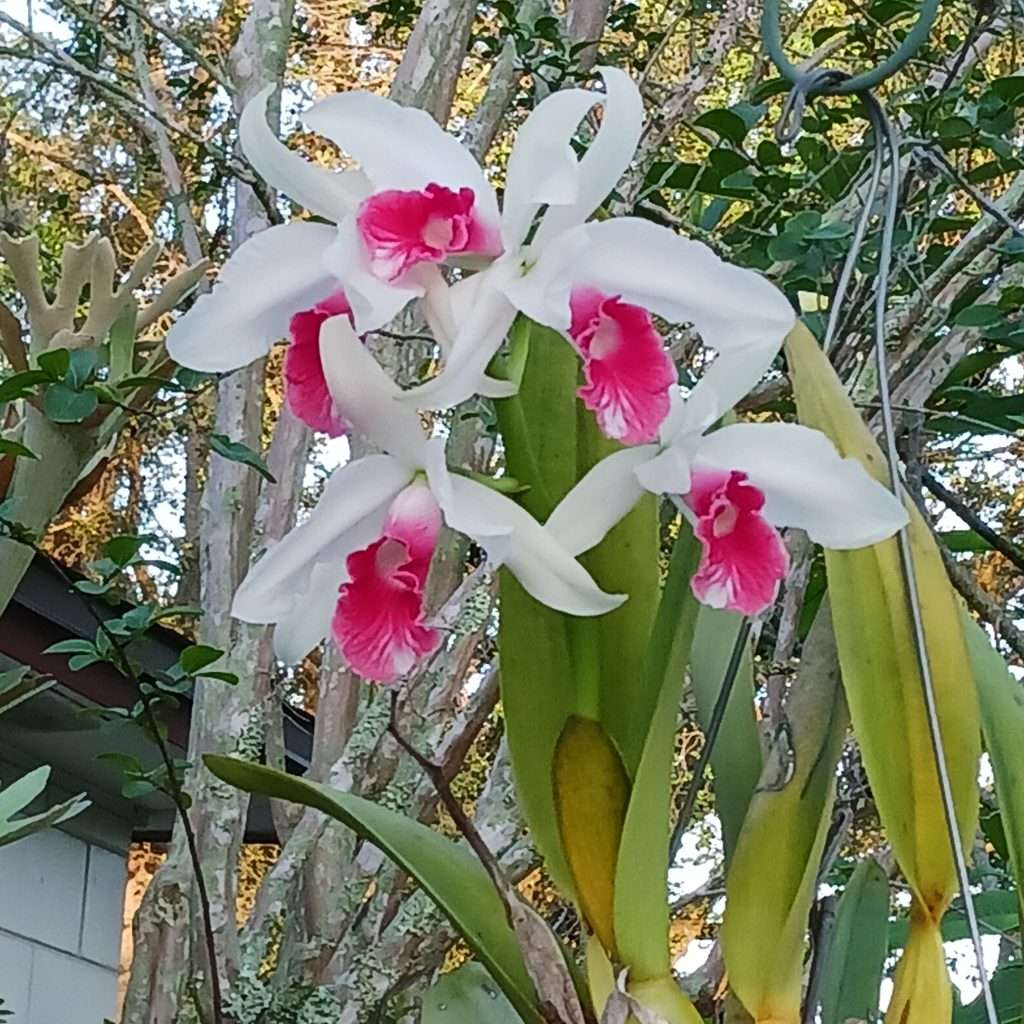
To answer the question posed at the beginning of this post, which orchid is my favorite? It’s this hybrid cattleya. It is a cross between L purpurata and C mossiae first seen in 1985. I saw it originally at an orchid show in 2012, but all the plants were sold out by the time I got to the table. I finally bought one in 2016. It was a sad single blossom on a plant I couldn’t be entirely sure would survive the year. But here she is in 2022, and she has thrived!