
Did you realize the USDA changed and updated the landscape zone map in November 2023? Calling all amateur gardeners, it’s a good time to check your home zone. I was surprised that my Orlando home moved from zone 9 to 10a. We are truly tropical!
I first noticed the shift last fall when ordering seed stock for a winter vegetable garden. I didn’t think much about it then, but I remembered it this year. The USDA maps are updated every 10 years. It’s like a planting census documenting what plants can tolerate winter in each geographic region. You read that right. The PRISM Climate Group documents the growing season trends by tracking extreme winter cold. They see a climate shift in my home zone from a average low of 25 degrees to a 30 degrees annually.
This shift isn’t a deal breaker for the average gardener, and in Florida it means we can start planting earlier in the year. We haven’t had a hard freeze in years, and the winter of 2024 was milder than usual. Fast forward to today, April 26th, and our nighttime temperatures are in the high 60s. We are past our frost point. Daytime temperatures in the high 80s indicate summer is nearly here.
Florida’s Zone Changes
I expected a zone change would cross the state like a dividing line. You can see via the new zone map for Florida that 10a, pictured in green, actually sits like an amoeba in the center of the state absorbing what remains of 9b. The 10a area covers nearly half the state and dips much farther south to Lake Okeechobee.
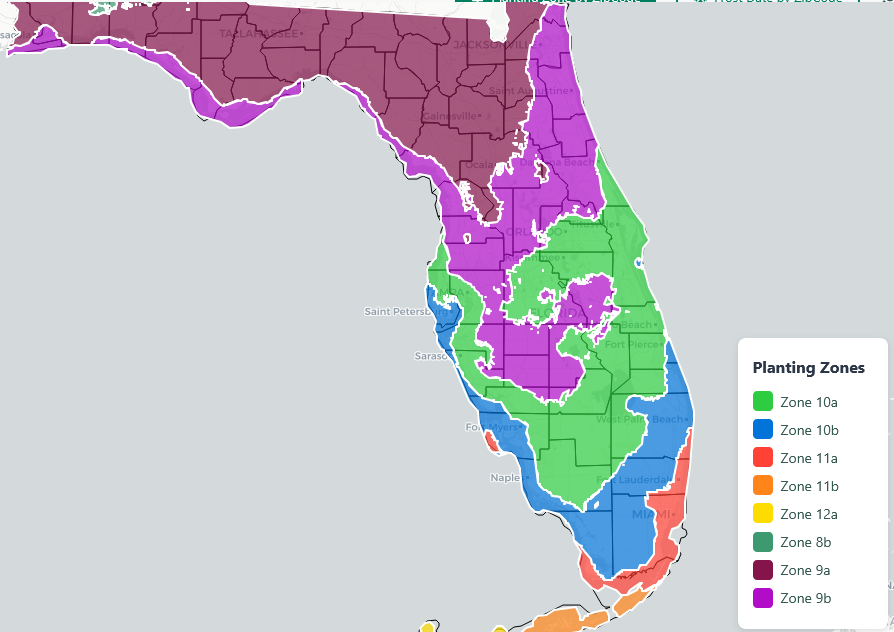
The changes to the landscape zones is attributed to global warming. It indicates that your areas low temperature has changed, and it specifically points to less cold temperatures. Zone 10a is a USDA Plant Hardiness Zone designation with a minimum average winter temperature of 30-35 degrees Fahrenheit.
What to watch with your zoning change
Older experienced gardeners say we need one good cold night during the winter to reduce the bug population in the Spring. That turns out to be true. The quantity of agriculture pests like aphids, white flies, ants, cockroaches, and termites are reduced by the cold. Commercial farmers will need step in with pesticides and organic solutions where Mother Nature can’t to protect Florida’s peppers, tomatoes, squash, citrus, strawberries, watermelon, and sugarcane harvests from pests.
We will probably see new pests in our own yards as new species like the Brown Marmorated Stink Bug and mealybugs, migrate from the south. Unfortunately, more chemicals could contribute to bigger algae and red tide in the coastal waters.
Changing Landscape Zones and Plants
Most homeowners will migrate to tropical plants to accommodate the warmer temperatures. Roses and some ornamentals may struggle in the hotter temperatures. Although we can start planting earlier in the year, the summer temperatures will arrive sooner and last longer.
If you’re like me and wondering about the growing zone change, visit your state’s horticulture extension. You’ll find all kind of helpful information and soil testing options.
My yard is mostly hibiscus, palm trees, and orchids already. This swap won’t require any big changes in my landscape. But I’ll be watching for new species in the back yard.